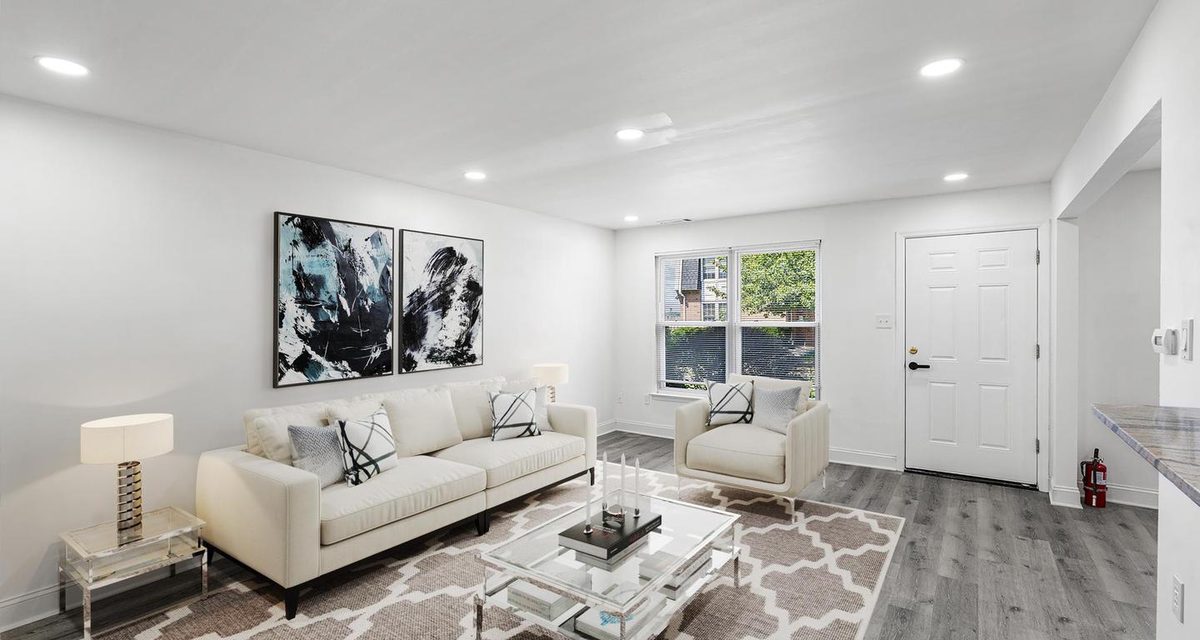
The asking price on 1032 Harbour Dr Unit 1032 is $200,000, which is $189 per square foot. Two costs ride along with it: $4,616 a year in property taxes and a $330 monthly association fee. Those two add up to about $715 a month before you have paid a dollar of principal or interest, and a lender counts both of them when it decides what you can borrow.
Most of the questions I get about a condo are really one question: what does this actually cost me, and what could go wrong between the offer and the closing. Here is the honest mechanics, without pretending to be your lender or your attorney.
The three fixed numbers
The price. $200,000, or $189 per square foot on 1,056 square feet. It came to market at $225,000 in July 2026 and was reduced to $200,000 in August, per the MLS history. Do not be thrown if a portal still shows the original figure in the public remarks. The price is the one on the listing header, and it is the only number that moves with negotiation.
The taxes. $4,616 a year on an assessed value of $100,600, per the listing data. Taxes are set by the municipality and the county and they change. They are not a percentage of what you pay for the unit, so do not assume a lower price means a lower tax bill.
The association fee. $330 a month, or $3,960 a year. It covers trash, lawn maintenance, snow removal and common area maintenance, per the listing data. It is not optional and it does not go away when the mortgage is paid off.
Add the tax and the fee together and you get $8,576 a year, which is $714.67 a month. That is arithmetic on the listed figures, not a quote. Homeowner insurance is a separate policy you buy, so it is not in that number.
A condo loan is two reviews, not one
When you finance a house, the lender underwrites you and appraises the property. When you finance a condo, the lender underwrites you, appraises the unit, and then reviews the project itself. That third piece is where condo deals slow down, and it is the piece most buyers have never heard of.
On a conventional loan the project review comes in a few forms, from a full review of the association's budget, insurance and ownership profile, down to a limited review or a waiver when the file qualifies. On an FHA loan the project generally has to be on FHA's approved list, or qualify under a single unit approval. VA has its own project approval process. Which route your file takes is your lender's call, not the listing agent's, and not mine.
What can make a project fail or complicate a review? Common examples include a high concentration of rented units, one owner holding too many units, pending litigation against the association, thin reserves, a budget that does not fund reserves, commercial space beyond a small percentage, and incomplete or inconsistent documents. I am describing the usual review issues, not this association. I have not read its budget and I will not guess at it.
The fee and your debt to income ratio
Lenders count the association fee in your debt to income ratio. Some programs count it in full. Others count a percentage of it when the project passes a limited review. Either way, a $330 fee occupies room in your monthly budget that a lender will not let you spend on a mortgage payment.
This is why a $200,000 condo does not always qualify the same way a $200,000 house does at the same income.
Insurance is two policies, not one
The association carries a master policy on the building and the common elements. You carry a policy on the inside of your unit, usually called an HO-6, covering your improvements, your contents and your liability, and often including loss assessment coverage for a shared bill the association passes to owners.
Two details matter. First, your lender may require the HO-6 before closing. Second, ask how the association's deductible works, because a large master policy deductible can land on owners after a loss. Get a quote early, since the premium is part of your monthly number and it is not in the listing.
Flood, and what Zone X shaded means
Zillow's hazard data places this address in FEMA Zone X, shaded, which is mapped as a moderate risk area. That is a mapping dataset. It is not a lending determination and it is not a promise about a premium.
Ask two questions. Will my lender require flood insurance for this loan? And what does the association's master policy cover if the building floods, and what would be billed back to owners? Both answers belong in writing before you waive anything.
Read the association documents, all of them
In a condo you are buying into a corporation as well as a home. Ask for the current budget, the reserve balance and the reserve study if there is one, the bylaws and rules, the most recent minutes, any pending or threatened litigation, any special assessments passed or discussed, and the resale certificate the association is required to provide.
A New Jersey contract on the standard form opens with an attorney review period. That window is where these documents get read, and it is short, so line up your attorney before you shop, not after you find something.
Six questions to ask a lender
- Do you do condo loans in this project, and which review type will my file need?
- How much of the $330 fee will you count in my debt to income ratio?
- What down payment and mortgage insurance will my file carry at this price?
- Will flood insurance be required here, given the Zone X shaded mapping?
- What will the association charge for the condo questionnaire, and who pays it?
- What is your realistic calendar from accepted offer to clear to close on a condo?
I am not a lender and I am not giving financing advice. What I do is put these questions in front of you early, so the answer about the project does not arrive two weeks after you have already paid for an inspection.
Running your own numbers
Start with the fixed costs of $715 a month for taxes and the association fee, add a homeowner policy quote, then add whatever principal and interest your lender quotes for your down payment and rate. That total is the number to compare against your budget, not the price divided by 360.
If you want to see what the unit looks like before you run any of it, the nineteen photograph gallery and the two minute walkthrough are both on the property page. If you want the town first, read living in Palmyra.
Questions this guide did not answer?
Call, text or send a note. You will get a straight answer about the unit, the association or the numbers, and nothing you did not ask for.
Ask Bob